

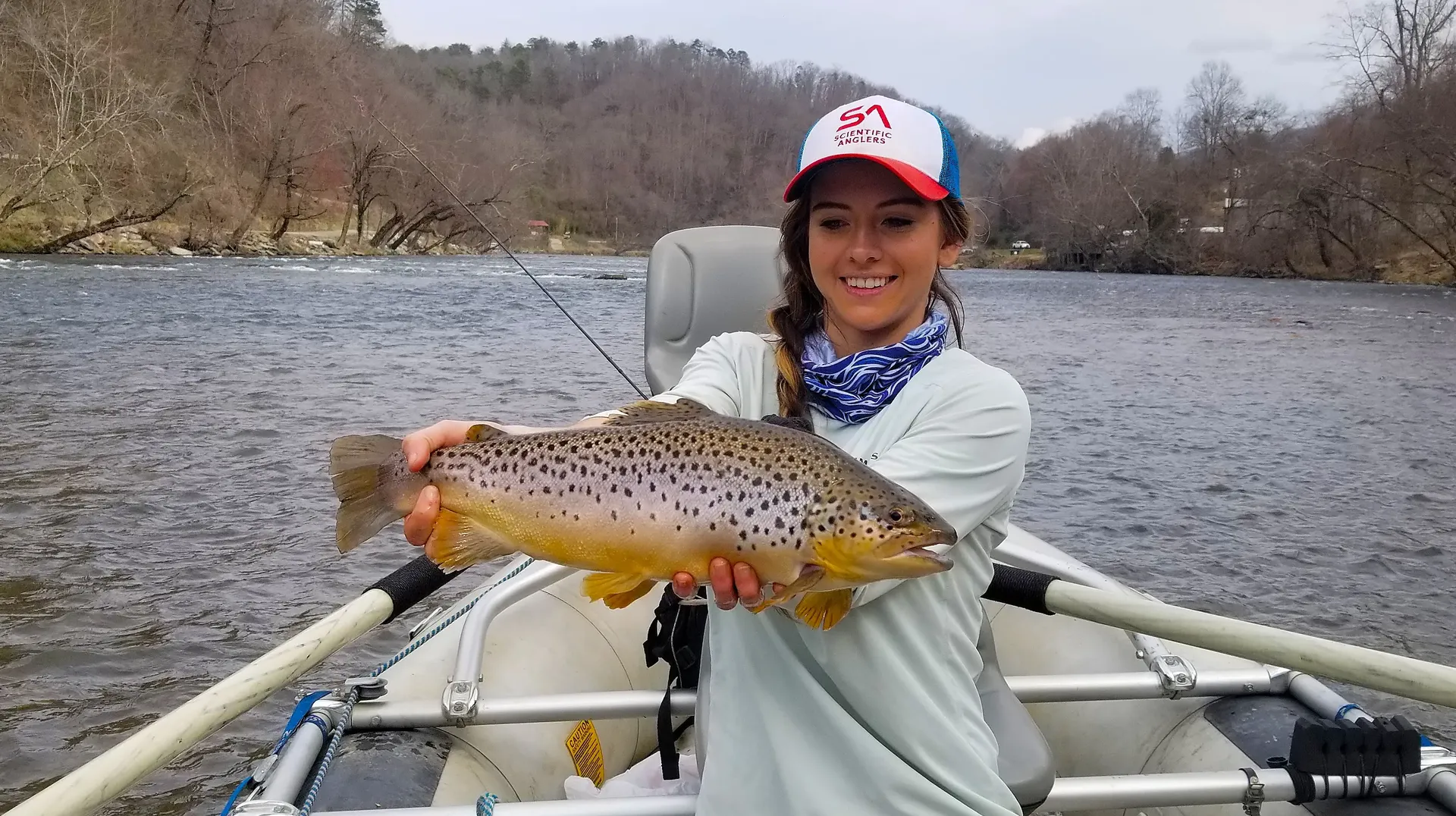


Bryson City, North Carolina sits at the doorway to the Great Smoky Mountains National Park, and it has earned its reputation as the Trout Capital of the East for one reason: no other guide training location in the East combines this much water-type diversity with this much protected public land.
Direct answer: Bryson City is considered the Trout Capital of the East because it sits inside Swain County, which contains over 2,400 miles of wild trout water and one of the highest percentages of protected public land of any county east of the Mississippi River — giving fly fishing guide trainees access to freestone streams, tailwaters, and technical pocket water within a single training location. That combination — water, land protection, and water-type variety — is exactly why the Fly Fishing Guide School is based here rather than in a single-river town.
Why Water Diversity Matters for Guide Training
Guiding clients well means being competent across water types, not just one river. A guide who has only ever fished a single tailwater will struggle the first time a client wants to wade a tight freestone creek, and vice versa. Bryson City removes that limitation from the very first day of training.
Trainees work on the Tuckasegee River and wild streams in Great Smoky Mountains National Park, including Deep Creek — waters with genuinely different characters.
The Tuckasegee River
The Tuckasegee runs through delayed-harvest sections with slower, more technical currents and the kind of patient, presentation-focused fishing that defines a large portion of professional guiding.
Deep Creek
Deep Creek, inside the national park boundary, is smaller freestone water where wild trout live in pocket water formed by boulders, root systems, and steep gradient changes — and where sloppy presentation simply does not get rewarded.
That range means a guide trained in Bryson City isn't just trained on "a river." They're trained on the full spectrum of water a professional guide will actually be asked to fish across a career. The cast that works in open, slow-moving tailwater is not the cast that works in rhododendron-choked freestone pockets. The rigging that's productive under a delayed-harvest section in January is not the rigging that produces on high-gradient Smoky Mountain wild trout in August. Learning to recognize that difference — and adapt on the spot — is the core skill that separates guides who work broadly from guides who are competent only in one context.
The curriculum moves between water types deliberately. Instructors don't just take trainees to one stretch and repeat drills — the week is structured so students build a skill on one water type and immediately apply and adapt it on different water. That repetition-with-variation approach is what accelerates the kind of flexible competency that professional guiding actually demands. No two days look the same, because real guiding doesn't look the same from one client to the next.
The Wild Trout Factor
Wild streams in the Smokies are more demanding than most trout water in the eastern United States. The diverse currents, boulder-strewn pocket water, rhododendron-choked banks, and overhanging cover that define these rivers require a different set of skills than most guides develop on put-and-take fisheries or wide-open tailwaters. Wild trout in this kind of water don't forgive sloppy presentation the way hatchery fish sometimes do — they live in that cover for a reason, and they've learned to use it.
For a guide-in-training, that difficulty is the point. Learning to place a cast accurately under low cover, manage a drag-free drift through converging currents, and read subtle holding lies in pocket water builds instincts that transfer to easier water immediately — but the reverse isn't true. A guide trained only on open, stocked water often struggles when a client wants the technical wild-trout experience that is one of the primary draws of this region. Starting on difficult water closes that gap permanently.
Wild fish also behave differently from hatchery fish in ways that matter for guiding. They hold in less predictable lies, spook more readily, demand better approach discipline, and require more precise fly selection and presentation. Training on wild fish means trainees are learning what it actually takes to consistently put clients on trout — not what it takes to catch fish that were stocked last week. That distinction shows up quickly in professional guiding, and it is one of the main reasons graduates of this program are prepared for real conditions from day one of their careers.
There is also a concentration of native brook trout in the high-gradient streams inside Great Smoky Mountains National Park that ranks among the most precious wild-trout habitat on the East Coast. Trainees who work this water develop a respect for native fish and wild systems that carries into how they guide clients — and that perspective is increasingly what serious fly fishing clients are looking for when they book a trip.
Public Land Access Changes What's Possible
North Carolina has the highest percentage of government-owned land east of the Mississippi River, and Swain County sits at the center of it. The Great Smoky Mountains National Park and the Nantahala National Forest encompass the majority of the surrounding watershed, meaning access to public water isn't a negotiation with private landowners or a long drive to a permitted beat — it's immediate, consistent, and available every day of the training week.
That matters in two practical ways. First, trainees get repeated access to the same stretches of water across multiple days, which lets instructors build a curriculum around measurable improvement on familiar water rather than constant re-orientation. When you return to the same run on day three that you fished on day one, you can see exactly what has changed — where your cast is landing more accurately, where your drift is cleaner, where your hook-set is tighter. That kind of visible progress requires stable access that only public land can provide at this scale.
Second, public land access mirrors the reality of professional guiding in this region. Most of the client-facing work guides do in Western North Carolina happens on public water. Learning to navigate public-water etiquette, shared access, and crowding as part of the training week prepares trainees for conditions they will manage every season — not just on their first client trip. Guides trained exclusively on private beats often encounter public-water dynamics for the first time after they've already started guiding professionally, which is a much harder time to develop those instincts.
For trainees coming from private water or managed club fisheries, this aspect of the Bryson City environment can be one of the most valuable lessons of the week. Public water demands spatial awareness, patience, and the ability to find productive water that other anglers haven't already covered. Those are guide skills in the fullest sense — and they are built into every day on the water here.
Why This Location, Not Somewhere Else
There are plenty of well-known trout fisheries across the country with guide training programs attached. What sets Bryson City apart specifically for guide training is that it compresses an unusual amount of variety into a very small geographic radius. Trainees don't need to drive hours between water types — freestone, tailwater, delayed harvest, and national park water are all within a short drive of each other. That density is what makes a four-day intensive training format work at a professional level.
The curriculum can move from technique to technique and water type to water type without losing time to logistics. Time saved in transit is time spent on the water — and in a four-day professional training program, time on the water is the most valuable resource in the schedule. A program built around a single river type, no matter how good that river is, cannot replicate what multi-water training in a compressed area produces in a single week.
There is also something harder to quantify but impossible to ignore about Bryson City as a working fly fishing town. The fly shops, outfitters, and professionals based here are serious about the craft. The conversations at the end of a day on the river are conversations between people who have fished this water for decades. That environment shapes trainees in ways a generic outdoor recreation center simply cannot. It creates a professional standard that trainees absorb just by being present in it for a week.
The Fly Fishing Guide School has been based in Bryson City since 1987 for all of these reasons. Nearly four decades of returning to the same rivers, refining the curriculum around the specific challenges these waters present, and watching graduates go on to successful careers has produced a training program that is inseparable from the place that shaped it. If you want to understand what makes this location different, the most honest version of that answer is this: it has been tested across nearly 40 years, and nothing else comes close.
What This Means If You're Considering Guide School
If you're weighing where to train, water access and diversity should be near the top of your list of questions for any guide school — not just casting instruction quality, though that matters too. A guide who trains on one water type for a week and then goes to work on a river with different characteristics is starting their career with a gap that shows up immediately. Training in Bryson City, where the water diversity mirrors the breadth of what professional guiding actually demands, closes that gap before it has a chance to open.
The other question worth asking is what the training environment demands of you. Easy water produces comfortable trainees. Technical water produces capable guides. The Smokies are technical water, and the curriculum is built around that difficulty by design. Trainees who push through it leave with a level of water-reading flexibility and casting confidence that is genuinely hard to build anywhere else in the eastern United States in a single week.
If you're still weighing whether the investment makes sense, the is fly fishing guide school worth it page covers the honest answer in full. If you want to understand what fly fishing guide certification looks like through this program, that's there too.
Where FFGS Students Train From
The Fly Fishing Guide School draws students from across the Southeast and beyond every session. Every group includes career-track guides and serious recreational anglers who made the drive from a major city and found the water worth every mile. Wherever you're starting from, Bryson City is worth the trip. Find your nearest gateway city and see what the drive looks like from where you are:
- Asheville, NC — the closest gateway city, about an hour through the mountains on US-74
- Atlanta, GA — approximately 3–3.5 hours via I-85, I-985, US-23/441, and US-74
- Birmingham, AL — approximately 4.5–5.5 hours, depending on route and traffic
- Bryson City, NC — the school's home base; you're already at the source
- Charlotte, NC — approximately 3.5–4 hours via I-85, US-74, I-26, I-40, and US-74
- Chattanooga, TN — approximately 2.5–3 hours via I-75, US-64, and US-74
- Greenville, SC — approximately 2.5 hours west through the South Carolina Upstate
- Knoxville, TN — approximately 2.5–3 hours via I-40 East and US-74 West
- Nashville, TN — approximately 5 hours via I-40 East and US-74 West
- Raleigh, NC — approximately 5–6 hours via I-40 West and US-74 West
The full locations page covers each gateway city in more detail — including what to expect from the drive and lodging options in Bryson City once you arrive.
Frequently Asked Questions
Why is Bryson City called the Trout Capital of the East?+
Bryson City sits in Swain County, which contains over 2,400 miles of wild trout water and the highest percentage of government-protected land east of the Mississippi River, giving anglers and guide trainees access to an unusually wide range of trout water in one location.
What rivers does the Fly Fishing Guide School train on?+
Training takes place across the Tuckasegee River, the Nantahala River, and Deep Creek — three rivers with distinct characters, from dam-controlled tailwater to technical freestone pocket water inside the Great Smoky Mountains National Park.
Is Bryson City good for wild trout fishing?+
Yes. Wild streams in the Smokies are technically demanding due to diverse currents, boulder obstacles, and overhanging cover, which makes the region especially valuable for anglers and guides who want to build technical casting and presentation skills.
What makes Bryson City different from other guide training locations?+
The combination of water-type diversity (freestone, tailwater, delayed harvest) and protected public land access within a small radius means trainees can work across multiple water types in a single week without losing time to travel between fisheries.
Do you fish inside the Great Smoky Mountains National Park during training?+
Deep Creek, which trainees work on during the program, lies within the Great Smoky Mountains National Park boundary. The Tuckasegee River is also used for ease of access for the group.
How does public land access affect guide training here?+
Because so much of the surrounding water is on protected public land rather than private property, trainees get consistent, repeated access to the same water throughout the week and learn to navigate public-water access and etiquette as part of their training — a skill they'll use professionally.
Tags
Related Posts